
ITINERARIES AROUND TREVISO AND THE TREVISO AREA
Six itineraries to discover Treviso and the surrounding area
We have put together five itineraries, easily accessible from Antica Dimora Stucky, to explore the area through its history, nature, culture and local traditions. Choose the route that inspires you most and let yourself be guided as you discover Treviso and its surroundings.
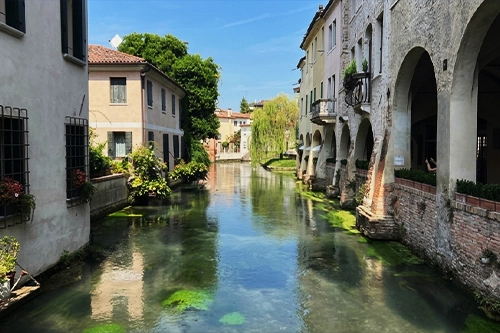

Antica Dimora Stucky and the Wonders of the Treviso Area
From our Dimora, you can easily discover Treviso and the wonders of the Veneto region. From Treviso’s historic centre to the course of the River Sile, from the Restera to the Venetian Villas, each itinerary offers a different way to experience the area, at your own pace and from a different perspective.
Heading towards the hills of Conegliano and Valdobbiadene, the home of Prosecco DOCG, you can immerse yourself in vineyards, villages and scenic landscapes. And for a day exploring Italy’s great art cities, Venice, Padua, Verona and Vicenza are among the destinations you can reach from Treviso, while the Dolomites offer a completely different experience, surrounded by nature and mountain landscapes.
Would you like to discover the area with a guide?
These are not fixed itineraries that must necessarily be followed from beginning to end. They are ideas to help you plan your day according to the time available, the season and the way you wish to experience the area.
Treviso and the surrounding area are full of stories, places and details that are not always easy to appreciate when exploring on your own.
During your stay at Antica Dimora Stucky, you can request, subject to availability, a dedicated tour with a local guide, allowing you to experience some of these itineraries through the stories and knowledge of someone who knows and lives in the area every day.
From the historic centre of Treviso to the waterways of the Sile, from the Prosecco Hills to the Venetian Villas, and as far as Venice, your visit can become a more in-depth experience, shaped around history, art, traditions and the landscape.
It is an option for those who do not simply want to see a place, but wish to understand what they are visiting, discover stories and curiosities, and take the time to truly appreciate the area.
The service is available on request and can be arranged according to the itinerary and the type of experience you are looking for.
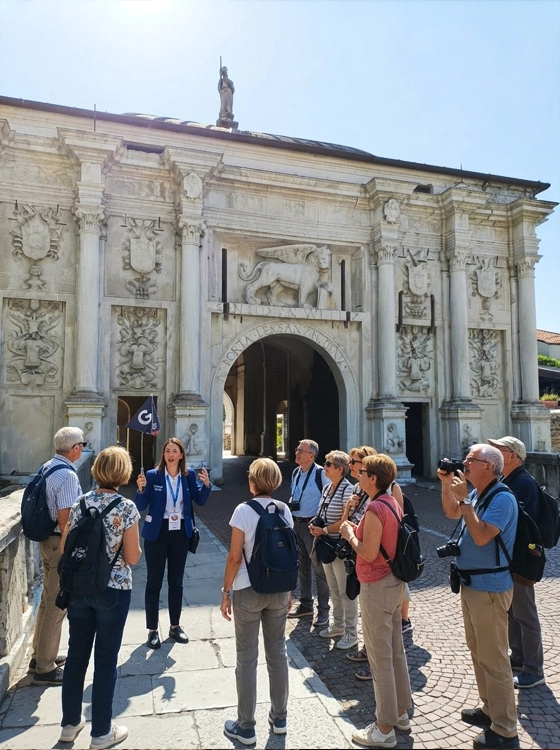
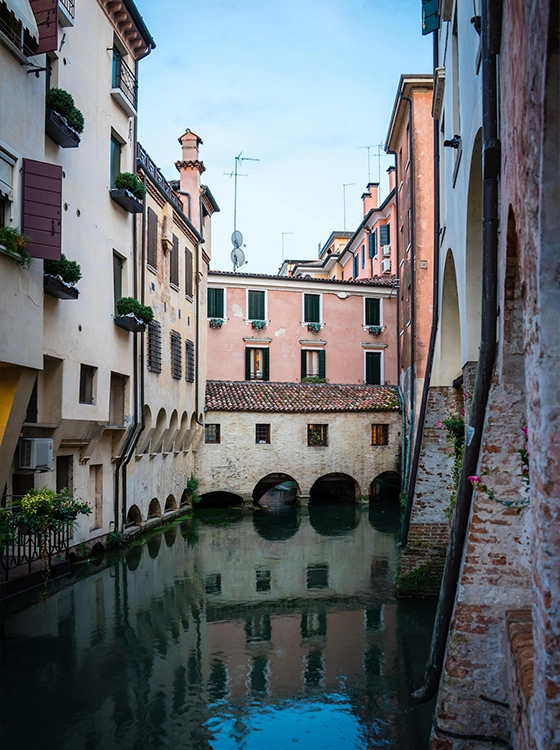
Treviso: the Historic Centre Between Water, History and Arcades
Treviso is a city that does not need great distances to surprise you.
Its historic centre, enclosed by the city walls, is easy to explore on foot, following a route through squares, arcades, historic buildings, canals and glimpses of water. It is a compact, elegant and pleasant city to experience at a leisurely pace, ideal for those who prefer to walk, observe and let themselves be guided by the atmosphere of the place rather than rush through a long list of monuments.
A good starting point is Piazza dei Signori, the heart of the city and a natural reference point from which to begin your visit. From here, the streets of the historic centre lead towards historic buildings, shops, cafés and corners where the connection between Treviso and water immediately becomes apparent.
A City Shaped by Water
One of the elements that makes Treviso particularly distinctive is its relationship with water.
The Sile, together with the network of waterways running through the city, has shaped the economic and urban life of the area for centuries. Canals, mill wheels, buildings overlooking the water and small passages opening up along the way reveal a different side of Treviso from that of the Veneto’s major art cities.
For this reason, a walk through the historic centre should not be limited to the main squares.
It is worth slowing down, walking beneath the arcades, following the waterways and observing how nature remains an integral part of the urban fabric to this day.
From Antica Dimora Stucky to Treviso
The Dimora’s location makes it easy to combine the tranquillity of the Restera along the Sile with a visit to the historic centre.
And for those who enjoy cycling, Treviso can also be reached by bike along the paths that follow the Sile and the Restera, avoiding traffic for much of the way and turning the journey itself into a pleasant experience surrounded by the landscape.
It is a different way of arriving in the city: instead of simply covering the distance, you can cycle along the river, take in the landscape and gradually make your way towards the historic centre.
You can then spend part of the day exploring the city before returning to the Dimora through a completely different environment, surrounded by the riverside landscape.
It is precisely this alternation between city and nature, between the lively atmosphere of the centre and the tranquillity of the Restera, that makes a stay here so appealing.
Treviso: Also a Place to Discover Through Food
A visit to Treviso can easily become a journey of discovery through the local cuisine and products of the area. Treviso’s culinary tradition is deeply connected to the seasons, the Veneto countryside and a food culture built around simple recipes, local produce and conviviality.
It is not simply about looking for a particular speciality to taste, but about taking the time to experience the city through its restaurants, traditional osterias and the flavours that are part of its history.
The Flavours of Treviso’s Culinary Tradition
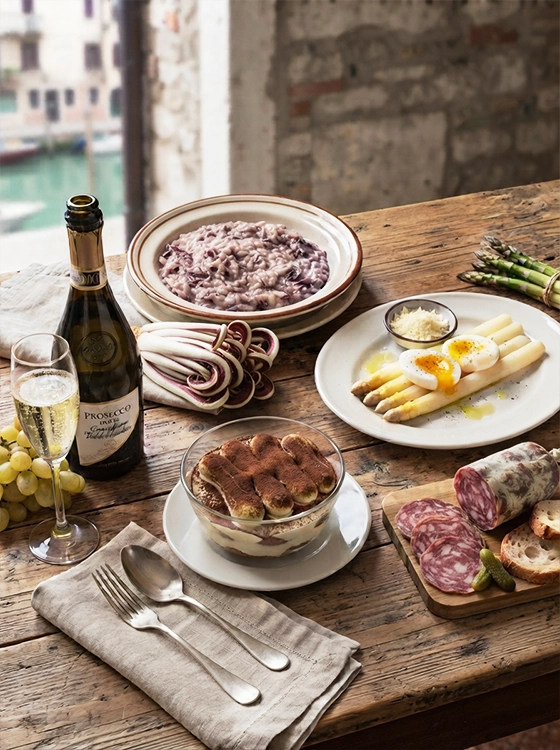
Among the area’s most representative products is Radicchio Rosso di Treviso, one of the symbols of local cuisine. Its distinctive, slightly bitter flavour makes it the star of numerous traditional recipes as well as more contemporary interpretations of Treviso’s cuisine.
Another speciality of the province is white asparagus from Cimadolmo, traditionally associated with the spring season. Its cultivation is part of the area’s agricultural heritage and is one of the products that best reflects the relationship between local cuisine and the Treviso countryside.
Following the seasons allows you to discover different flavours throughout the year, with produce and recipes changing in harmony with the rhythm of the area.
Traditional Venetian Dishes
Alongside agricultural produce, local cuisine preserves recipes rooted in Veneto’s traditional cooking.
Pasta e fasoi is one of the best-known examples: a simple, hearty dish deeply rooted in the home cooking tradition of the Veneto.
Sopressa Veneta, meanwhile, belongs to the tradition of local cured meats and can be enjoyed with bread, cheeses and other regional products, often as part of a sharing platter or during an aperitivo.
And then there are the small tastes of Venetian tradition, such as cicchetti, perfect for an informal break between walks through the historic centre.
Local wines naturally have their place at the table too, starting with Prosecco, which has long accompanied aperitivi and convivial occasions. The relationship between this wine, the hills and the Treviso landscape deserves a section of its own, however: we will explore it further in our itinerary through the Prosecco Hills between Conegliano and Valdobbiadene.
Tiramisu and the Local Dessert Tradition
When talking about Treviso’s culinary heritage, tiramisu cannot be left out. This famous Italian dessert is closely associated with Treviso’s gastronomic tradition and has become one of the best-known desserts in the world.
Tasting it in the city adds another small journey into the history of local cuisine, discovering a dessert that began on Treviso’s tables before reaching far beyond the borders of the Veneto.
Eating in Treviso Is Also a Way of Experiencing the City
Food does not necessarily need to become a separate itinerary. It can naturally be part of a day spent exploring Treviso.
After a walk through Piazza dei Signori, the arcades, canals and streets of the historic centre, you can stop at a traditional osteria, enjoy a leisurely lunch, try a few cicchetti or simply sit down for an aperitivo.
It is precisely this combination of art, history, water and food that makes discovering Treviso so enjoyable.
There is no need to plan every moment.
Leaving room for the seasons and your own curiosity can be the best way to discover local cuisine, perhaps by following the recommendations of those who know the area and allowing yourself to be surprised by a speciality you had not planned to try.
Between a walk through the historic centre and a route along the Sile, Treviso can also be discovered through its flavours: a different and authentic way to get to know the city and the surrounding area.

The Restera along the Sile: an itinerary through nature, water and history
For those staying at Antica Dimora Stucky, the Sile is not simply a destination to visit.
It is the landscape that surrounds the Dimora.
The Restera runs alongside the property, following the river along the ancient towpaths that were once used to pull the burci upstream — the boats that carried goods along the river.
Today, this same landscape is one of the most pleasant places in the Treviso area to experience slow tourism, either on foot or by bicycle.
Cycling along the Sile
Following the Restera means travelling through a landscape where nature and history exist side by side.
Along the route you will encounter mills, waterways, small bridges, historic structures and traces of river navigation, while the vegetation follows the course of the Sile, creating a particularly pleasant environment for anyone looking for a break from the city.
One of the most interesting routes leads towards Casier and the Cimitero dei Burci, where the remains of the old boats emerge from the water and vegetation.
It is one of the most distinctive places for understanding the historic relationship between the river and the economic activities of the area.
From Treviso to Casier and Beyond
The cycle network along the Sile allows you to create routes of different lengths.
You can choose a short cycle ride simply to enjoy the scenery, or turn the excursion into a full day out, travelling towards Casier and Casale sul Sile.
The beauty of this area lies precisely in the possibility of adapting the route to your own pace.
You do not need to complete the entire route to enjoy the experience.
An itinerary perfect even for those who don't cycle
The Restera is not just for cyclists.
It is also an ideal setting for a walk in nature, for those who enjoy photography, taking in the landscape or simply spending a few hours away from traffic.
The Sile offers a completely different perspective on Treviso: slower, quieter and closely connected with nature.
How Much Time Should You Allow?
For a first experience along the river, half a day may be enough.
Those wishing to tackle a longer cycling route can instead dedicate a full day to the excursion, planning several stops along the way.
From Antica Dimora Stucky to the Sile
Here, the Dimora’s location is a particularly distinctive feature.
The Restera is right outside your door.
You do not necessarily need to organise a complicated excursion: simply step outside the Dimora and start following the river, deciding along the way how far you would like to walk or cycle.
It is one of the experiences that best reflects the character of Antica Dimora Stucky and its connection with the surrounding area.
The Prosecco Hills between Conegliano and Valdobbiadene
North of Treviso, the landscape changes completely.
The flatlands give way to the hills and vineyards of Conegliano and Valdobbiadene, one of the Veneto’s most distinctive areas for its wine-growing landscape and Prosecco culture.
Wine is at the heart of the area, but it would be reductive to think of these hills simply as a destination for wine tastings.
The true beauty of the area lies in its landscape.
Vineyards, small villages, panoramic roads, parish churches, villas and rural architecture tell the centuries-old story of the relationship between human work and the hilly environment.
The Prosecco Road
One of the best-known routes is the Strada del Prosecco e Vini dei Colli Conegliano Valdobbiadene, an itinerary of around 50 kilometres that passes through some of the area’s most characteristic places.
The route connects Conegliano, San Pietro di Feletto, Refrontolo, Solighetto, Farra di Soligo, Col San Martino, Cartizze and Valdobbiadene, creating a day in which wine tasting, scenery and culture can naturally come together.
Possible stops include places such as the Pieve di San Pietro di Feletto, the Molinetto della Croda, Villa Brandolini and the Torri di Credazzo.
There is no need to try to see everything.
The Prosecco Hills are best appreciated by choosing a few meaningful stops and allowing time to take in the landscape.
More Than Just Wine
A day in the hills can naturally include a visit to a winery for a tasting, but the experience can be much broader.
You can stop in a village, reach a panoramic viewpoint, walk among the vineyards or explore the architecture and historic landmarks scattered throughout the area.
In this way, wine becomes part of the journey, rather than the only reason to visit.
A Landscape That Changes with the Seasons
The hills are never quite the same.
The light, the colours of the vineyards and the agricultural activities change throughout the year, offering different experiences depending on the season.
For those who enjoy photography, nature and landscapes, this is a particularly fascinating area to explore at a leisurely pace.
How Much Time Should You Allow?
To experience the area without rushing, we recommend dedicating a full day to the Prosecco Hills.
It is better to choose a few meaningful stops than to try to cover the entire area.
From Antica Dimora Stucky to the Hills
Staying at Antica Dimora Stucky allows you to combine exploring the hills with the tranquillity of the Restera.
A day among vineyards and villages can end by returning towards Treviso and the Sile, leaving the hilly landscape behind to rediscover the riverside setting of the Dimora.
Guided Winery Visits and Tastings
To enrich your stay and discover the area at close quarters, you can enjoy a sensory journey from grape to glass, among vineyards, wineries and the landscapes of the Prosecco Hills.
Experiences can include winery and vineyard visits, walks among the vines and guided tastings of local wines and sparkling wines, accompanied by artisan cured meats, mountain cheeses and traditional Venetian cicchetti. For those who would like to enjoy the landscape at an even slower pace, it is also possible to arrange a picnic in the vineyard with the “Merenda del Vignaiolo”.
Advance booking is required. Ask us for information about the available experiences and to arrange your visit.

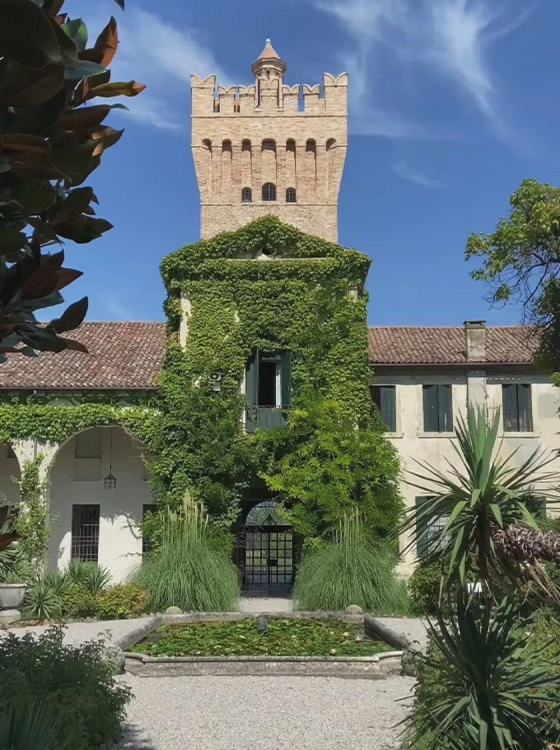
The Venetian Villas between Treviso and Venice
The Veneto region preserves a unique architectural heritage, made up of historic residences, gardens, barchesse and rural estates that tell the story of the Republic of Venice and its presence on the mainland.
The Venetian Villas are not simply elegant residences.
They are places where architecture, art, agriculture and landscape come together.
For this reason, an itinerary dedicated to these villas can be an original way to discover the Veneto beyond its better-known tourist destinations.
The Terraglio and the area between Treviso and Venice
One of the most interesting areas stretches along the Terraglio, the historic road connecting Treviso and Venice, lined with numerous villas and historic residences.
Travelling through this area means crossing a landscape where grand residences still interact with greenery, gardens and the surrounding countryside.
It offers a different perspective on the historic relationship between Treviso, Venice and the Venetian mainland.
History, architecture and landscape
Every villa tells a different story.
Behind a monumental façade there may be a family, an architect, an artist, an agricultural estate and a specific social and economic role.
For this reason, it is better not to turn the itinerary into a simple collection of addresses.
It is far more interesting to choose a few residences and discover their history, while observing how they fit into the surrounding landscape.
It is naturally important to check access arrangements and opening days in advance, as not all the villas can be visited in the same way.
An itinerary to combine with Treviso
The Venetian Villas can easily be included in a wider day exploring the area.
A visit can be combined with the historic centre of Treviso, the Terraglio or, with more time available, an exploration of the Riviera del Brenta.
This allows you to create an itinerary focused not just on a single attraction, but on the history and character of the Venetian landscape.
How Much Time Should You Allow?
Half a day can be enough to explore some of the villas in the area.
If you would like to visit several residences or continue towards the Riviera del Brenta, it is better to allow a full day.
From Antica Dimora Stucky to the Venetian Villas
The Dimora’s location is particularly well suited to those who wish to explore the area between Treviso and Venice, while still being able to return at the end of the day to the peaceful surroundings of the Sile.
It is an ideal itinerary for those looking for an experience beyond the classic visits to Italy’s art cities.
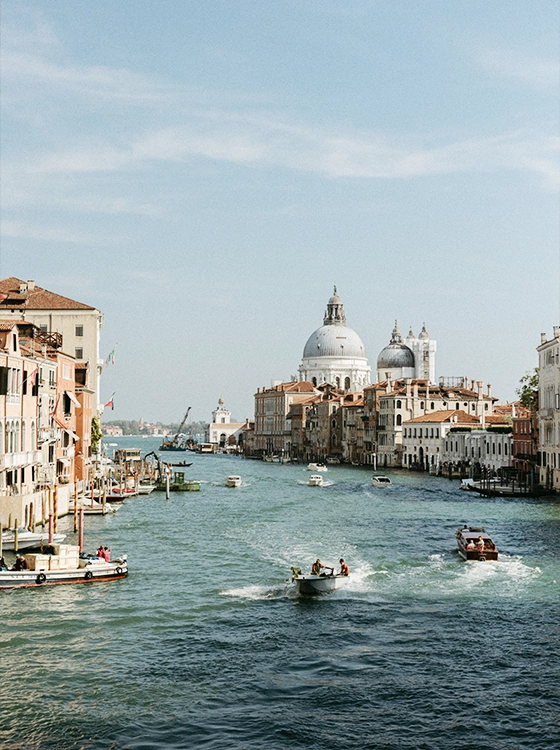
Venice: A Day in the City of the Serenissima
Venice is a destination that needs no introduction.
The lagoon city is one of the world's best-known destinations for art and culture, but precisely because of this, it can be difficult to decide how to organise a visit without turning it into a race from one landmark to another.
For those staying at Antica Dimora Stucky, Venice can become an experience to enjoy over the course of a day, knowing that you can return afterwards to the tranquillity of the Restera and the Sile.
Venice’s Iconic Landmarks
For first-time visitors to Venice, an itinerary can naturally include St Mark’s Square, the Doge’s Palace, the Grand Canal and Rialto, together with the city’s main monuments and historic landmarks.
But Venice has much to offer beyond its best-known sights.
Calli, campielli, fondamenta, bridges and hidden corners reveal a more everyday side of the city, away from the busiest routes.
A City to Understand
Venice becomes even more fascinating when you understand why a city of such complexity came to be built in the lagoon.
The history of the Serenissima, its trade, maritime routes, relationship with the Mediterranean and connections with the mainland all helped shape the city’s identity over the centuries.
It is also interesting to remember that the areas around Treviso and Venice are not separate worlds.
The Sile and its waterways served for centuries as an important connection between the inland areas and the lagoon, making Treviso part of a much wider commercial and territorial network.
Venice Without Rushing
The advice, especially for a first visit, is not to try to see everything.
Choose a few essential sights and leave room for spontaneous discoveries.
For those who already know Venice, it can instead be interesting to choose a sestiere, a particular theme or one specific aspect of the city and dedicate a whole day to exploring it.
Art, architecture, the history of the Serenissima, churches, palaces, trade and everyday life offer endless possibilities.
How Much Time Should You Allow?
For a first experience, a full day allows you to discover the main sights without turning your visit into a race.
Those wishing to explore Venice in greater depth should, naturally, allow more time.
From Antica Dimora Stucky to Venice
The possibility of combining Treviso and Venice during the same stay allows you to experience two profoundly different places.
On one side, the monumental and international lagoon city.
On the other, the more intimate character of Treviso and the tranquillity of the Restera del Sile.
It is precisely this contrast that makes staying in the Treviso area such an interesting choice.
Come and discover the wonders of Treviso and the surrounding area
Discover the strategic location of Antica Dimora Stucky in Treviso, the perfect starting point for exploring everything our area has to offer.